
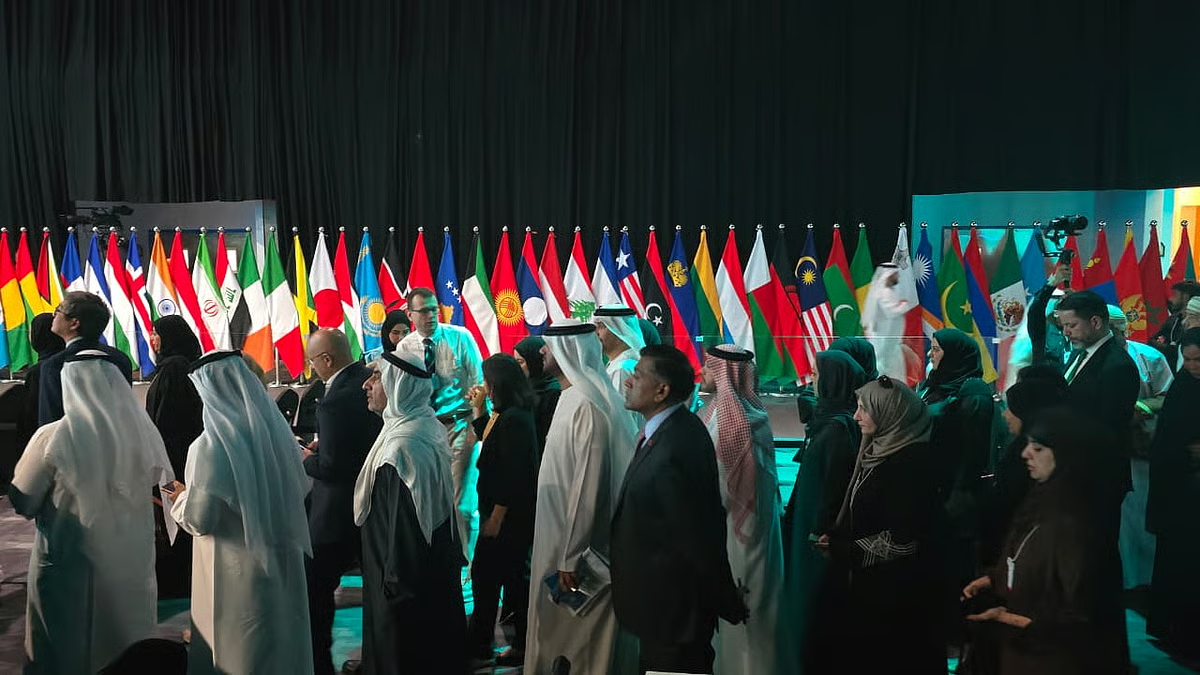


The world governments summit 2026 opened on Tuesday in Dubai, as UAE leaders welcomed foreign delegations for a three-day international gathering. The event convenes governments, institutions, and private sector leaders to address governance systems amid economic, social, and technological change.
More than 60 heads of state and government are attending the summit, alongside over 500 ministers and representatives from 150 governments. Participation also includes more than 80 international and regional organisations, over 700 chief executives, and 87 Nobel Prize laureates. Organisers said total attendance exceeds 6,250 participants.
UAE President Sheikh Mohamed bin Zayed Al Nahyan and Sheikh Mohammed bin Rashid Al Maktoum, Vice President and Prime Minister of the UAE and Ruler of Dubai, formally received delegates at the opening session. Sheikh Mohamed said the summit serves as a platform for dialogue that supports cooperation and coordinated action among governments.
World governments summit outlines governance priorities
Sheikh Mohamed reaffirmed the UAE’s commitment to diplomatic engagement and international partnership. He stressed the importance of collective action as countries respond to shared global challenges and work toward long-term stability and prosperity.
Sheikh Mohammed bin Rashid said the UAE welcomed representatives from 150 governments to encourage shared responsibility. He noted that governments face rapid global transformations and carry responsibility for designing systems that can manage future disruptions and societal change.
Expanded world governments summit agenda for 2026
The 2026 summit runs under the theme Shaping Future Governments and features an expanded agenda of more than 445 sessions. Over 450 global figures, including heads of state, ministers, policymakers, and experts, are participating across five focus areas.
These themes include global governance and effective leadership, societal wellbeing and capacity building, economic prosperity and strategic investment, urban futures and evolving demographics, and future realities and emerging frontiers.
The programme also includes 25 global forums and more than 45 ministerial and high-level meetings. Sessions cover areas such as finance, youth policy, sustainable development goals, future government systems, tourism, sport, and retail. Meetings organised with international partners include IMF, OECD, IFC, ICAO, and regional development institutions.
During the summit, organisers will release 36 strategic reports in collaboration with international knowledge partners and publish the third edition of the Global Ministers Survey. Several global awards recognising government reform, sustainable development, public service, and education will also be presented.


