


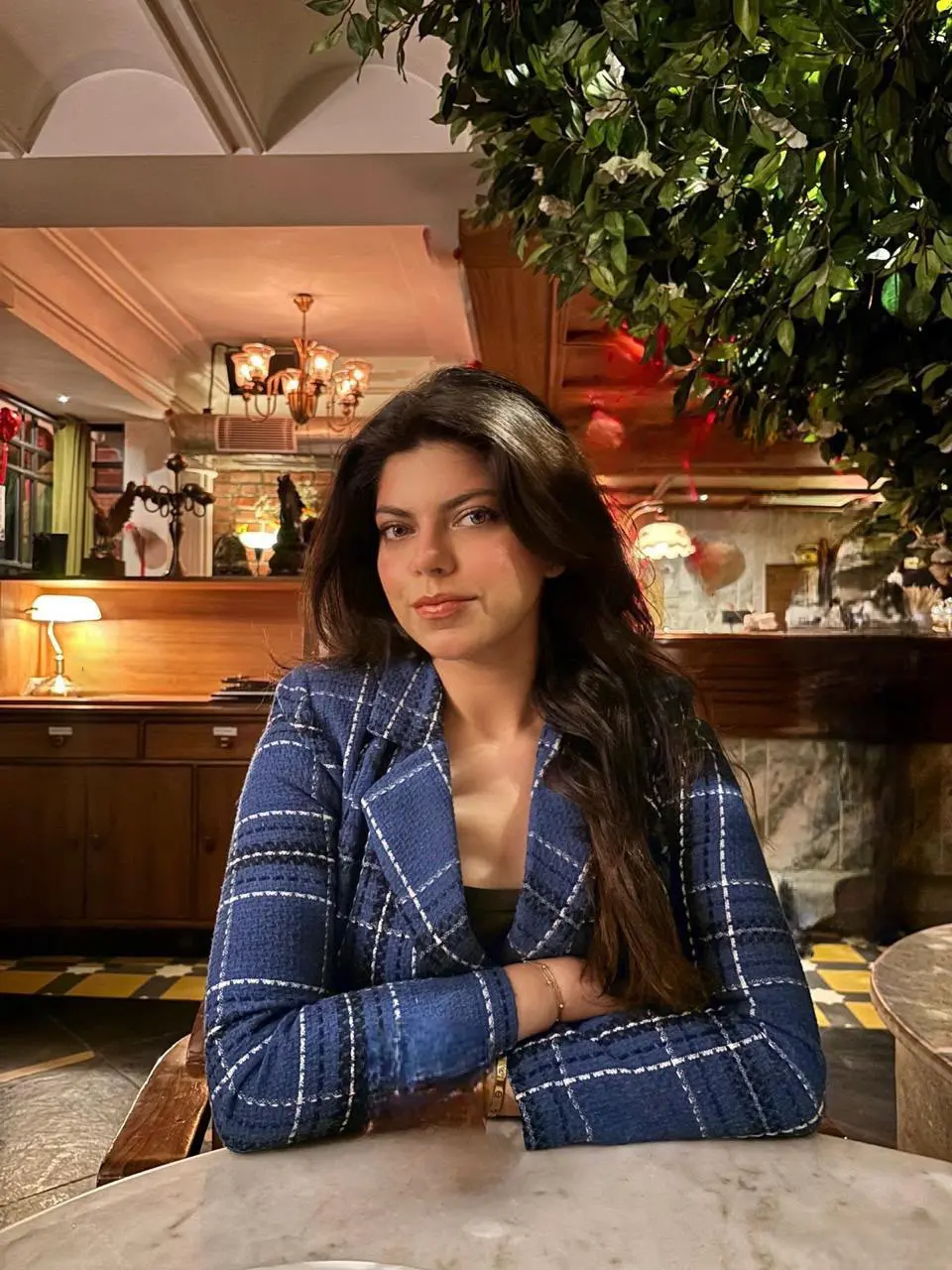
Ozlem Gundogdu Soyer spent nearly a quarter of a century at Citi, and the assumption she has had to correct most often is that she stayed because it was comfortable. The truth was the reverse. What connects every stage of that career is a single habit of mind: start with the business, then work backwards to the people.
- Not one job, several
- Start with the business, not the HR solution
- What the top of an organisation actually looks like
- Culture cannot be exported
- People don’t resist change, they resist uncertainty
- Better questions than answers
- What AI raises, rather than replaces
- Before you feel ready
- Still writing the story
Ozlem Gundogdu Soyer, CPCC, is a global HR leader and CHRO with 28 years of experience across talent management, organisational transformation and strategic HR advisory. She spent close to 24 years at Citi, rising from specialist roles in Türkiye to CHRO of Citibank Türkiye, then to regional talent leadership across EMEA and a global advisory role. She is a Certified Professional Co-Active Coach and is based in Dubai.
Editor’s note: Long tenure at a single employer has become something professionals feel they need to explain. Ozlem Gundogdu Soyer’s answer reframes the question entirely: her career was never about staying in one role, but about repeatedly widening her understanding of the business, the organisation, and the people needed to move it forward.
Not one job, several
People notice the number first. Twenty-four years at one company invites an assumption, and Ozlem Gundogdu Soyer has heard it enough times to answer it before it is asked. Most people assume she stayed because she was comfortable.
“The reality is exactly the opposite,” she says. “I stayed because I was constantly challenged.”
What kept her there was a curiosity that ran wider than any single specialism. Rather than going deep in one corner of HR, she built deliberately across it, compensation and benefits, generalist work, business partnering, country HR leadership, and eventually regional and global talent advisory, because she wanted to understand how business strategy, leadership, talent, culture and execution connect to each other. Each move was a conscious decision, and each was chosen for what it would teach her about how organisations grow, transform and make difficult calls.
She is careful to divide the credit. Citi and the leaders she worked for gave her an exceptional platform, and she took ownership of her own development on top of it. She is equally careful not to romanticise the place. It was demanding, fast-paced and held people to very high standards, and that, she says, is precisely what made it an extraordinary place to build a career. The organisation was transforming as quickly as she was, and they grew alongside each other.
Which is why she rejects the framing of a long tenure altogether. “Looking back, I don’t see one 24-year job,” she says. “I see a series of careers within one organisation, each one preparing me for the next.”
“Many assume I stayed because I was comfortable. The reality is exactly the opposite. I stayed because I was constantly challenged.”
Start with the business, not the HR solution
Ask which role most reshaped how she understands leadership and she declines to name just one. It happened in two stages, and the distinction between them is precise: becoming CHRO changed what she was responsible for, while her later regional and global roles changed how she thinks.
Becoming CHRO of Citibank Türkiye was the first turning point. She was no longer accountable for delivering HR solutions. She was accountable for making sure the organisation had the leadership, talent and culture to deliver the business strategy, and the questions she asked herself changed accordingly.
This is the sequence that has governed her work ever since, and it is the thread connecting every stage of a varied career. She does not begin by asking what HR programme or intervention is needed. She begins with the business.
What is the business trying to achieve? What does the organisation need in order to deliver that strategy? What leadership, talent, organisation, culture and skills are required to get there? And only then: what people solutions will enable it?
Reversing that order is what separates her perspective from a purely functional one. An HR intervention designed without a clear line back to the business problem may be well built and still solve nothing. Work the sequence the other way round and the same levers, talent, succession, organisational design, reward, learning, culture, stop being separate programmes competing for attention and start being instruments pointed at one outcome. It is also why she has always been drawn to business partnering and broader HR leadership rather than a single specialism: you cannot work backwards from a business problem you do not understand.
The regional and global roles added a second dimension. Working with senior leaders across a global business showed her how decisions are actually made at enterprise level, how large organisations balance consistency against flexibility, translate enterprise strategy into local reality, and hold focus on the priorities that matter most. It also hardened a conviction she now states plainly: leadership capability is one of the very few sustainable competitive advantages an organisation can build.
She sums the two stages up neatly. If the CHRO experience taught her how to lead an organisation through people, the global experience taught her how organisations build leadership at scale.
“I don’t start by asking what HR programme we need. I start with what the business is trying to achieve, and work backwards.”
What the top of an organisation actually looks like
Few people get to watch senior leadership from as close a vantage point as Soyer has, and what she describes bears little resemblance to the version most people imagine.
From the outside, seniority reads as authority and confidence. What she has seen is that the closer you get to the top, the more complex the decisions become, and the fewer of them have a clean answer. Leaders are perpetually balancing growth, performance, risk and regulatory expectation against the human consequences of whatever they decide.
The moments that defined her career were periods of significant transformation, when leaders had to make decisions necessary for the organisation’s future while recognising the real cost to people. The leaders she respected most did not avoid those decisions, and they did not minimise their responsibility for them either. They communicated openly, stayed transparent about difficult realities, and treated people with dignity throughout.
That has shaped how she works with leaders now, whether as an HR executive or as a coach. She does not see her role as making hard decisions easier by simplifying them. It is to help leaders think more broadly, challenge their assumptions, weigh other perspectives and understand the wider implications, so they arrive at choices they can stand behind.
She has also noticed something that runs against the stereotype of executive confidence. The strongest leaders, over time, become more comfortable admitting they do not have all the answers. They stay curious, keep asking questions, and deliberately surround themselves with people who think differently.
That, for her, is where leadership maturity starts: not in always being right, but in having the judgement to make the best possible decision with the information available, while never losing sight of the people who will live with it.
Culture cannot be exported
Soyer’s comfort in multicultural environments predates her international career by decades. As a teenager she spent three years at an American International School in Belgium, surrounded for the first time by classmates from many nationalities and perspectives. The lesson stayed with her: there is rarely only one right way of seeing the world.
That mindset became operationally useful when she moved into regional and global roles, where success depended on holding enterprise priorities and local realities in the same hand. Her conclusion is that leaders in global organisations have to operate with two perspectives simultaneously, championing the organisation’s purpose, values and direction while acting as authentic voices for their own markets. Global consistency matters, but not at the cost of local relevance. In the strongest organisations, local insight does not merely adapt the global strategy. It helps shape it.
Nowhere was this clearer than in the culture and leadership work she supported across the region. Culture, she found, cannot simply be shipped from headquarters. It has to be understood in the context of each market and brought to life in ways that resonate there, while still strengthening the enterprise overall.
Leading multicultural teams reinforced it personally. Her EMEA advisory team was spread across Dubai, Warsaw, Belfast, Moscow and Milan, and earlier, leading HR for the UAE and Bahrain, she worked with teams representing many nationalities. Across all of it, one pattern held. Cultures differ, but people’s aspirations are remarkably similar. Wherever they come from, people want to be respected, trusted, heard and given the chance to contribute.
People don’t resist change, they resist uncertainty
Having led organisations through significant transformation, Soyer is direct about what actually determines whether change succeeds. It is not the quality of the strategy or the rigour of the execution plan, both of which she considers essential. It is how well leaders bring people with them.
The central misreading, she argues, is about what people are resisting. They rarely resist change itself. They resist uncertainty.
Which makes communication a continuous obligation rather than a launch event. It has to be ongoing, transparent and honest, including when the answers are not yet available. People do not expect their leaders to be certain. They expect clarity about direction, openness about the difficulties, and confidence that decisions are being made thoughtfully.
She also finds that transformation is seldom really about new structures or processes. It becomes sustainable when people understand not just what is changing but why it matters and what part they play in it. The distinction she draws there is a fine one and worth keeping: when people feel included rather than merely informed, commitment deepens.
Underneath all of it is a belief she returns to repeatedly. Organisations do not change. People do. Strategy sets the direction, but leadership creates belief, and without trust even excellent strategies struggle.
And the measure of success is broader than the business case. Transformation works when the organisation comes out stronger, with leaders people still trust and still choose to follow.
“Organisations don’t change, people do. Strategy creates direction, but leadership creates belief.”
Better questions than answers
Alongside the executive career, Soyer is a Certified Professional Co-Active Coach, and she is clear about what that has and has not done. Coaching did not change her leadership style. It deepened it.
Early on, like most leaders, she believed her job was to supply answers. She came to understand that leadership is more often about asking better questions. Coaching taught her to listen differently, to get curious about what sits beneath a problem rather than rushing to solve the version presented, because the first issue someone raises is frequently not the real one. The most valuable conversations are the ones where leaders have room to reflect, challenge their own thinking and reach insights they genuinely own.
There is an obvious kinship here with how she approaches organisations. Working backwards from a business problem and listening past the first version of a personal one are the same discipline applied at different scales: in both cases, the presenting question is rarely the real one.
That has proved as useful in business as in coaching. Whether the subject is succession, organisational design, leadership effectiveness or transformation, she has found that durable solutions rarely come from one person supplying the right answer. They emerge through dialogue, trust and shared ownership. It has also made her a better business partner, by teaching her to balance support with challenge and to build the kind of environment where leaders can be honest while still being pushed to think past their assumptions.
She wants to correct one misconception in particular. Coaching is widely assumed to be for people who are struggling; her experience has been the opposite. The most effective leaders she has worked with tend to invest the most in their own development, because they understand that growth starts with self-awareness and that asking for support is a strength rather than a weakness.
What AI raises, rather than replaces
On artificial intelligence, Soyer’s position is unambiguous and cuts against the anxious version of the conversation. She does not believe AI will reduce the importance of the human touch. She believes it will increase it.
She points to recent PwC research, reported in the Financial Times, finding that as AI automates more technical and cognitive tasks, organisations are placing greater value on distinctly human skills: judgement, adaptability, collaboration and leadership. She finds that encouraging because it reinforces her own thinking. Technology will keep changing how work gets done. It will not remove the need for people who think critically, decide soundly, build trust and bring others with them.
What she does expect to change is the expectation placed on everyone. Leadership used to be associated with seniority. Going forward, people at every level will need to show greater ownership, initiative and decision-making, and even those early in their careers will be expected to navigate ambiguity, work across functions and use technology responsibly.
For organisations, that reframes the planning question, and it is the business-first sequence applied to the future rather than the present. Instead of staffing the jobs that exist today, the question becomes what talent and skills the business will need tomorrow, and how to start building them now. It is why she does not treat workforce planning, leadership development, talent, skills and culture as separate initiatives. They are all the same preparation. The organisations that succeed, in her view, will not necessarily be the ones with the most advanced technology, but the ones that help their people adapt, keep learning and apply technology in ways that create real business value.
“AI may transform work, but leadership will continue to transform organisations.”
Before you feel ready
Asked to name the moment that changed her trajectory, Soyer resists the premise. There was no single moment. Her career was shaped by a series of decisions to step into roles before she felt completely ready.
Some of those were moves into unfamiliar HR disciplines. Others meant broader business responsibility, relocating internationally with her family, leading through transformation, or moving from country to regional to global scope. Every transition carried uncertainty, and she took each one anyway. What she took from the pattern is a correction to how most people think about readiness: confidence rarely arrives before the challenge. It develops because of it.
She is careful to distinguish this from recklessness. Stepping outside your comfort zone is not about taking unnecessary risks. It means being willing to ask questions and to accept a degree of discomfort as the price of the opportunity. So whenever she noticed she had become comfortable, she went looking for something that would stretch her again.
The same philosophy shapes what she took from the leaders around her. She had no single mentor, but many teachers. Some pushed her to think more strategically. Some trusted her with opportunities before she believed she was ready. Others showed extraordinary courage in difficult periods, or demonstrated that humility and high performance can coexist. The common thread among the ones she admired most is worth noting, because it is a rarer quality than it sounds: they did not create dependency, they created confidence. They challenged people, invested in their growth, and built environments where people felt trusted enough to take risks and make mistakes.
It is the standard she holds herself to now. Whether leading HR teams or advising executives, she believes her role is to leave individuals and organisations stronger than she found them.
Still writing the story
After nearly three decades, what holds her attention is the part nobody has answered yet: how organisations will evolve, what leadership will look like, and what work itself is becoming.
In her last global role, much of the conversation was about the future of talent, how organisations identify and prepare people for roles that may not yet exist. It reinforced a responsibility she has come to see as central. The job is not to prepare people for today’s roles, but to help them stay relevant and adaptable for whatever follows.
That question has become personal as well as professional. Her son is about to start university, which naturally makes her wonder what success will look like for his generation. Not because she expects to have the answer, but because it is the same question she enjoys exploring with the leaders she advises. Whether the person in front of her is an experienced executive or someone entering the workforce for the first time, helping people realise their potential in a changing world is what she finds meaningful.
She takes the long view on the current moment. Every major industrial and technological transformation in history has reshaped organisations and redefined leadership, and she expects this one to do the same. What keeps her curious is that the ending has not been written. Every organisation is different, every leadership team faces something different, and every conversation still teaches her something.
“Change is inevitable, but growth is a choice.”


