

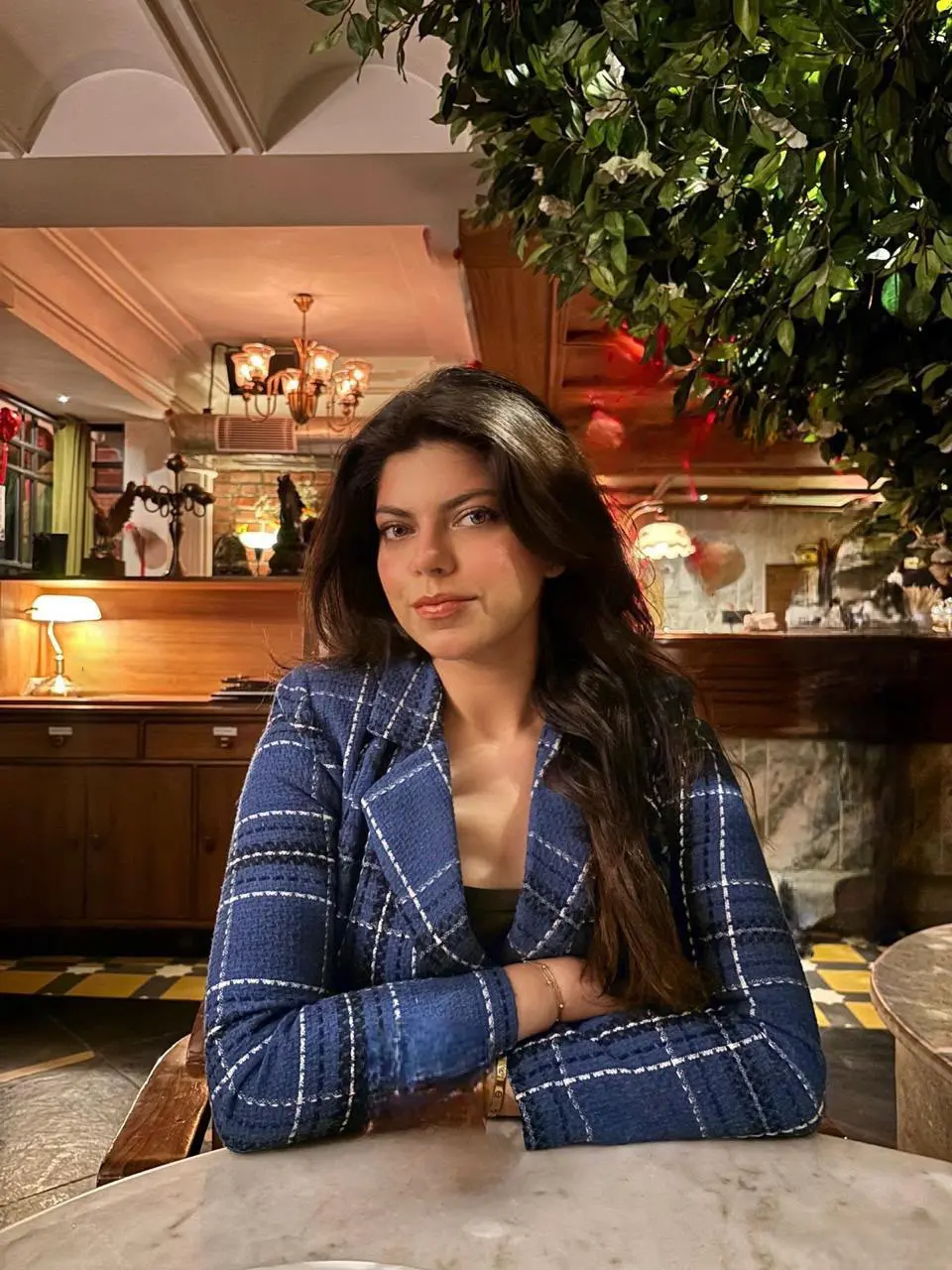
Charmaine Paris grew up in Dubai and has spent fifteen years building people functions across the UAE and MENA. Her view on the phrase every organisation now uses offers a refreshingly different perspective: Humanity at work is not about avoiding hard conversations. It is about how well those conversations are handled.
Charmaine Paris is a Dubai-based senior HR leader with 15 years of experience shaping people strategies across retail, leisure and entertainment, engineering, and IT. She brings a distinctly business-minded approach to HR, grounded in the belief that strong people practices are inseparable from strong organisational performance. Charmaine holds an MBA from the University of Wollongong in Dubai and an Advanced Diploma in Strategic People Management (Level 7) from CIPD UK.
Editor’s note: “Humanity in the workplace” has become one of the most repeated phrases in corporate life, and one of the least examined. Charmaine Paris offers a refreshingly unconventional perspective on what it truly requires, one that places both humanity and accountability at the heart of what it means to be human at work.
What growing up here teaches you
Perhaps one of the more distinctive aspects of Charmaine’s approach is the way she understands cultural intelligence. She did not learn cultural intelligence from a framework. She learned it from the city in which she grew up.
Dubai’s extraordinary diversity offered an early education in the nuances of how people communicate, build trust, respond to feedback and navigate difference. For someone who would go on to build a career in HR, that experience became less a professional skill than a way of seeing, making cultural intelligence a fundamental part of how she approaches people and organisations.
That early exposure also shaped her understanding of HR itself: not as a function that operates alongside the business, but as one deeply embedded within it. The implication is a natural resistance to one-size-fits-all solutions. For Charmaine, working with people begins with understanding what motivates them, their context, their culture, their individual drivers and then connecting that understanding to what the organisation needs to achieve.
She sees culture as a spectrum, expressed in the ways people communicate, give feedback, establish trust and respond to authority. Growing up in Dubai meant encountering those differences not as concepts to be studied, but as part of everyday life. It taught her an enduring lesson: there is rarely a single right way to lead or communicate.
The real skill lies in knowing where someone is coming from, having the curiosity to meet them there, and still keeping sight of the outcome.
The principles may be universal. The experience is uniquely human.
Having built her HR career across retail, entertainment, engineering and technology, Charmaine has developed a perspective that is both broad and deeply human: While organisations may differ in pace, culture and purpose, the fundamental needs of the people within them remain remarkably consistent.
For her, that common ground is where good HR begins. Every organisation has its own rhythm, its own DNA and its own way of creating value. Yet beneath those differences, people are often seeking the same things, to feel valued, respected and trusted, and to know that their contribution has meaning.
What changes is how those needs are expressed. In one environment, recognition may be what matters most. In another, it may be trust, the freedom to innovate, or the opportunity to take on genuinely complex challenges. The need itself does not necessarily change; its expression does.
This is where Charmaine’s approach becomes particularly nuanced. She does not see people strategy as a matter of applying the same formula across different organisations, or even assuming that the same approach will work for every individual within one. It requires paying attention to the person, the culture, the context and, ultimately, what the business is trying to achieve.
Because being seen at work is about more than being noticed. It is about understanding the value someone brings, recognising what enables them to do their best work, and creating the conditions for that contribution to matter.
Humanity is not softness
This is perhaps where Charmaine’s perspective becomes most distinctive and most compelling. In an HR landscape where “humanity” can easily become shorthand for kindness, comfort and consensus, she brings a more grounded perspective.
For Charmaine, humanity at work is not about treating people delicately. It is about treating them fully: as individuals with context, ambition, capability and responsibility, rather than simply as roles on a headcount plan.
The difficulty, she suggests, is what has happened to the idea in translation. Somewhere along the way, being human at work became confused with making work softer. And in doing so, organisations risk losing sight of what genuine care actually looks like.
Her view is refreshingly direct: trust is not built by avoiding difficult conversations. It is built in how those conversations are handled when they inevitably arise.
That requires two things to exist together and Paris is clear that neither is sufficient on its own. There must be genuine care for the person, alongside the courage and honesty to tell them what they need to hear in order to grow and perform within their roles. The difference lies in how that truth is delivered: with enough empathy to be heard as support, and enough clarity to be understood as truth.
For Paris, humanity does not mean lowering expectations; it means communicating them with greater care and clarity.
Judgement is not a soft skill
The same philosophy shapes Charmaine’s view of technology, particularly AI. Where some see a threat to the human side of work, she sees an opportunity to bring it into sharper focus.
Her belief is simple: the more decisions technology can make for us, the more valuable our ability to make the right ones becomes. Because judgement is not something that can simply be automated. It is shaped by experience, empathy, context and the courage to pause before deciding.
Charmaine is quick to recognise what AI already brings to the table. It can surface data, identify patterns, flag trends and even highlight potential attrition risks before they become apparent. For HR, that is powerful.
But information is not insight, and insight is not judgement.
A system can tell you that a team is struggling. It cannot necessarily tell you why. It cannot sit across from a manager, listen between the lines, understand what is happening beneath the surface and decide what that person and the wider business needs next.
That, for Charmaine, is not a “soft skill”. It is a serious leadership capability.
Good judgement is knowing when to listen, when to challenge, when to guide and when to step back. It is being able to read a situation in its entirety and make a decision that considers both the human reality and the commercial one.
And perhaps that is the more hopeful way to look at AI. As technology becomes better at processing information and making predictions, it gives people more room to do what only people can do well: think deeply, understand one another and make decisions with both intelligence and humanity.
“The more decisions get automated, the more valuable good judgement becomes.”
Willing to unlearn
Paris completed an MBA while building her career and later took the CIPD Level 7 qualification, and she is clear that neither was about accumulating credentials.
Learning has never felt like an obligation to her. It has felt like a natural part of growing, professionally and personally. And she has a memorable way of describing why it cannot stop: the world has a habit of humbling us, and just when we think we have found all the answers, it changes the questions.
What worked yesterday may not work tomorrow, and she sees that not as a reason for certainty, but for curiosity. The real value of learning, in her view, is not simply acquiring knowledge. It is developing the openness to reconsider what we thought we knew.
There is strength in recognising that an approach which once served you well may no longer be the right one. “Growth does not always ask us to know more. Sometimes, it asks us to see differently.”
For Charmaine, effective leadership is therefore less about how much a person knows and more about their willingness to listen, reflect and adapt. It is the humility to change course when circumstances change, and the confidence to see that as growth rather than failure.
Disruption, or possibility
Ask Charmaine what impact she hopes to make, and her answer extends beyond the organisations she works with. She sees the current moment as a defining one for human resources overall, a period in which technology, changing career paths and evolving expectations are reshaping the workplace at an unprecedented pace.
Every generation encounters a moment that changes how work is understood. For this generation, she believes, that moment is already underway.
AI is accelerating how work gets done. Roles are evolving. Skills are becoming less fixed. And many of the structures and assumptions that have guided organisations for decades are being reconsidered.
For Charmaine, the question is not whether organisations should change. It is how they bring their people through that change.
That distinction sits at the heart of her thinking. Transformation can feel disruptive when people are left without context, clarity or a sense of where they fit. But when leaders communicate openly, build trust and give people the opportunity to adapt and grow, the same transformation can become a source of possibility.
This is where she sees HR playing its most important role: connecting organisational ambition with human experience. She believes people and performance were never competing priorities. The strongest organisations are those that understand how deeply the two are connected, where trust informs strategy and people understand not only what is changing, but why.
It brings her thinking full circle. Whether the conversation is about leadership, technology, culture or transformation, her philosophy remains consistent: people do not need to be shielded from change. They need to be trusted with it.
And perhaps that is the opportunity for HR now, not simply to help organisations manage change, but to help people find their place and their potential within it.
“If I can help create workplaces where transformation feels empowering rather than disruptive, and where people don’t simply survive change but grow because of it, that’s the impact I hope to make.”


