


StrongHer by StrongYes
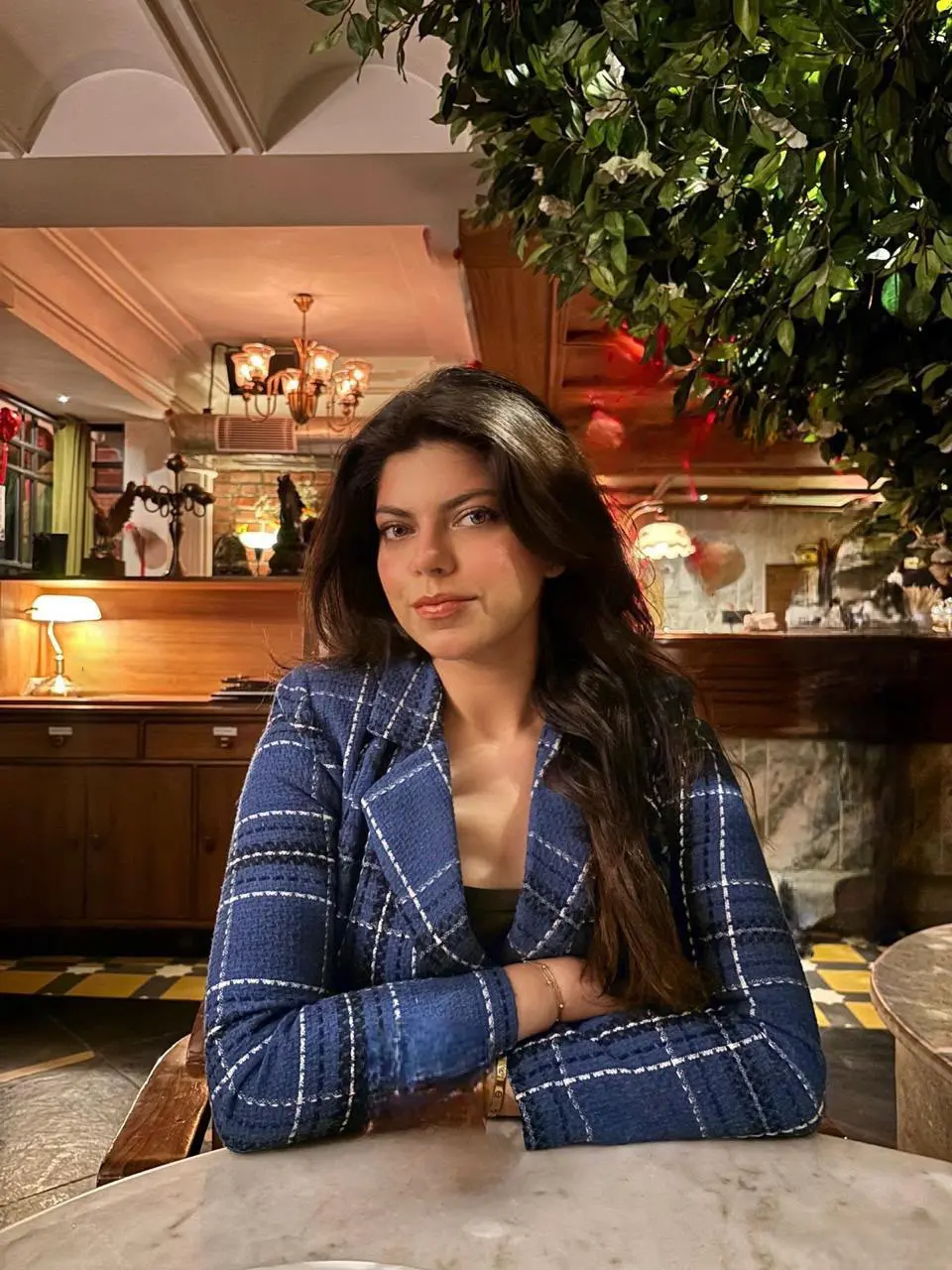
Melitsa Mizrahi has spent two decades building cultures across more than thirty countries, which has left her unusually hard to impress. Culture, she argues, is not what an organisation says about itself. It is what people experience when nobody is watching.
Melitsa Mizrahi is Chief People Officer at PJP Investments Group, one of the Papa Johns master franchises, operating across the UAE, Saudi Arabia, Jordan and India. She spent seventeen years at The Coca-Cola Company, most recently as HR Director for Eurasia and the Middle East. She has partnered with executives and teams in more than thirty countries, co-authored She Rises, and was named among the Top 100 Women Leaders in the Middle East.
Editor’s note: Every organisation now has a culture statement. Far fewer could survive the test Melitsa Mizrahi applies to one. Her standard is simple, uncomfortable, and worth holding your own workplace against.
Purpose that arrived slowly
Melitsa Mizrahi’s sense of purpose did not arrive as a single realisation. It surfaced gradually, across hundreds of conversations, difficult decisions and career transitions.
What she noticed early in her HR career was that strategies, structures and processes are essential and also inert. They only come alive through people. What stayed with her were not the frameworks she built but the conversations in which someone found confidence they did not know they had, stepped into leadership, or recognised potential in themselves they had never seen.
Those moments led her to a conclusion that has governed her work since, and it is a commercial argument as much as a human one.
“The most consequential business decisions are rarely just business decisions. They are determined by the quality of our people decisions: who we hire, who we develop, who we trust, who we put into leadership, and the environment we create for them to succeed.”
Which is when the definition of the job changed for her. HR was never about managing talent. It was about unlocking human potential.
She adds one qualification that is easy to miss. Purpose, for her, is not something discovered once and then owned. It is something she continues to choose, every day.
It remains the through-line whatever the scale of the work. Leading an organisational transformation, building leadership depth, or coaching one person, the aim does not change: create environments where people can find their purpose and become more than they believed possible. If she has helped even a few people change the trajectory of their careers, she counts that as the most meaningful measure of success available to her.
Seventeen years, never the same job twice
People are routinely surprised that she stayed at one organisation for more than seventeen years. Her answer disarms the assumption behind the question. She never felt she had the same job twice.
The record bears her out. She joined as a generalist in the Turkey business unit, led talent acquisition across Turkey, the Caucasus and Central Asia, then took the HR director role for those nine countries, where she co-led talent and organisational development and supported joint ventures, mergers and acquisitions. From there it was HR Director for the Middle East and North Africa, covering twenty-four countries, before moving to Dubai in 2020 as HR Director for Eurasia and the Middle East, building the wiring of a new network organisation spanning twenty-five.
Every few years the geography changed, the business context shifted, and the leadership challenge became something else entirely. She was continually learning to lead in new cultures, navigate different levels of market maturity, and build strategies that respected local realities while still serving a global vision.
Those years did more than broaden her experience. They built the leadership philosophy she works from now. Being handed increasingly complex assignments taught her to operate without waiting for certainty, and to lead in situations where she did not have all the answers. Moving between cultures taught her that authority travels badly and trust has to be earned locally. And being consistently challenged by the leaders around her taught her the lesson she is most emphatic about: longevity and growth are not opposites.
What kept her there was partly those leaders, and partly values. She was working for an organisation that believed people were its greatest asset not as a slogan but in how it invested in development, encouraged mobility and trusted people with real opportunities. When personal values and organisational values line up, she says, work becomes more than a career.
Which leads to the observation she draws from those years, and it cuts against the reflex of an era that treats movement as ambition and staying as inertia. Longevity should never be confused with comfort. If an environment keeps challenging your assumptions, expanding your perspective and giving you room to create impact, then staying can be as courageous as leaving.
“Those years weren’t about staying in one company. They were about continually becoming a different leader.”
What travels, and what doesn’t
Her career has run across Central Asia, Turkey, the Middle East and Africa, and she resists the tidy answer about what that teaches you. Asked whether it changed how she sees people or simply confirmed how much we share, she says both, and means it.
The differences are real and they matter. How you build trust, give feedback, celebrate success or navigate change in Almaty is not how you do it in Amman, Istanbul or Dubai. Which makes her firm on one point of method.
“I don’t believe in importing leadership models wholesale from one market to another. Context matters. But I have also learned that beneath those differences, people everywhere want to be seen, trusted, and to feel that their contribution matters.”
Those three requests have shown up everywhere she has worked, without exception, and the finding has made her more certain rather than less. Leading across borders, as she puts it, has not made her more relativistic about people. It has made her more confident about what is universal.
The other thing it produced was humility. The more cultures she has worked in, the less she assumes she has the answers. She has learned to listen before leading, ask before advising, and stay curious rather than certain. Global leadership, in her definition, is not becoming an expert in every culture. It is becoming a better student of people. Cultures shape how we lead. Shared humanity is what lets us connect.
The test culture has to pass
Culture is a word every organisation now uses, which is exactly why Melitsa has developed a standard for it. After two decades of shaping cultures across different organisations and geographies, she has concluded that culture is not what is written on the walls or presented at a town hall.
A healthy culture behaves consistently when no one is watching and no camera is present.
It shows up instead in everyday behaviour: how leaders respond under pressure, how people treat each other, and whether employees feel safe enough to speak up, challenge ideas and be themselves. One of the clearest signals she looks for is whether a culture has a pulse, whether people know their voices are actually heard. Even when the answer to a request is no, there is a response, a conversation, and a sense of respect in how it is delivered.
She is careful to separate this from the softer version of the idea, which is where a lot of people-first language ends up.
“A people-centric culture isn’t a culture where everyone is comfortable all the time. It is one where people can be challenged, held accountable, and still feel respected and trusted.”
The real diagnostic is what happens when conditions get difficult, and her observation here inverts what most people would predict. Under strain, unhealthy cultures go quiet. Healthy ones become more connected, because people trust each other enough to stay in the room. The test is whether people feel safe enough to challenge ideas, admit mistakes and ask for help precisely when it is hardest to do so.
Which places a particular demand on leaders, and she treats it as a capability rather than an instinct. Reading between the lines, and sometimes reading the silence, is a form of leadership intelligence.
Announcing change is not leading it
The same gap between the declared and the experienced explains what she considers the single biggest error leaders make during transformation.
“The biggest mistake is assuming that announcing change is the same as leading change,” she says.
Leaders will spend months perfecting the business case, she notes, and comparatively little time helping people understand what the change means for them personally. Change creates uncertainty, and uncertainty produces resistance, which organisations then try to solve with more communication.
Her diagnosis is that better communication is not the answer, or at least not the whole of it. What is required is empathy, involvement and trust. And she would correct the diagnosis itself before anyone reaches for a solution.
“People don’t resist change. They resist change they don’t understand, trust or feel part of.”
When people feel included rather than managed, transformation becomes something they help create rather than something that happens to them.
Curiosity, judgement, and the thing technology can’t do
On AI, Melitsa names curiosity first, paired with the judgement to turn knowledge into wisdom. AI will hand us more information and possibility than we have ever had access to, and the leaders who create the most impact with it will be the ones curious enough to keep asking better questions rather than accepting outputs.
The differentiator, as she frames it, is no longer access to answers. It is knowing which questions to ask, which answers to trust, what context is missing, which trade-offs matter, and what to decide when there is no perfect option available.
“AI can accelerate our access to information. It cannot take accountability for our decisions. The leadership advantage will increasingly be our ability to exercise judgement in ambiguity, and to bring humanity to the decisions that affect people.”
She adds a third quality, and it connects back to everything she believes about culture: empathy will become a defining leadership advantage, because the more technology changes how we work, the more people will value leaders who can connect, inspire and create environments where people feel seen.
Rising again
Melitsa co-authored She Rises, and writing her chapter asked her to do the thing she routinely asks of others: pause, reflect, and make meaning of the journey.
She has spent years helping people navigate change, resilience and reinvention. Turning that lens on herself produced a surprise. She realised how many moments of her own resilience she had simply accepted as part of the journey without ever properly acknowledging them.
That became the heart of what she wrote, and the phrase she chose for it carries her whole philosophy in two words: Rising Again. Not returning to who you were before, but using every experience to grow into who you are meant to become.
It is also the most accurate description of what she did next, and she is deliberate about why that version of the story matters, particularly for women reading it. Leaving a successful career can be harder than leaving an unsuccessful one. She was not running from something broken. What it took was the courage to walk away from something that was working.
Uncertainty as an invitation
The decision that most changed her path was leaving. After seventeen years, walking away from a successful global career was among the most uncertain choices she has made, and she is honest about why it was hard. She had built an identity around a company, a role and a journey that had shaped her deeply.
What she had to do next was rediscover herself without those supports, through her purpose, her values and the impact she wanted to create rather than through a title or an organisation.
The lesson she took from it is the one she would most want passed on. Uncertainty is not always a warning. Sometimes it is an invitation. The moments when we feel least certain, in her experience, are frequently the ones that reveal the most about what we are capable of.
What she wants to do with the years ahead extends past any single organisation. Through speaking, mentoring, writing and platforms like She Rises, she wants to make one argument land in particular: that people-centric leadership is not an HR responsibility. It is a business advantage and a leadership choice. She has watched what a single leader’s mindset can do to the opportunities available to hundreds or thousands of people.
“My goal isn’t to raise the bar necessarily with introducing more HR programmes. It’s to raise the bar for how leaders think about people, performance, and potential. Policies aren’t my legacy. The leaders I create are.”
Coming up from StrongYes: Join our live Masterclass, “Agentic AI in HR: From Hype to How,” on 17 October at 11 AM GST, featuring Dr. Ankur Narang, Ex-AVP – Artificial Intelligence, Apparel Group, Dubai; Ex-IBM Research & Sun Microsystems, USA.
No Fee for the StrongYes HR Community.
Register here: https://www.linkedin.


